|
Torque specifications for Metric
fasteners
There are lots of fasteners on a vintage scooter
where you might
question: "What torque do I need to use for this nut or
bolt?" Plenty of blogs and discussion groups have very specific
detail about what may or may not be the original factory torque
specifications for any particular fastener. Aftermarket
performance kits come with specific torque instructions as well.
All of this should be taken into consideration. The
most important thing is to get yourself a decent torque wrench and
watch a quick video on how to use it. Like this one:
How to use a torque wrench
Once you know how to use a torque wrench you can use the chart below to
get a pretty solid idea on how tight any fastener should be.
There are always exceptions but this is a good general approach.
Any given fastener has a size and a strength asociated with that
piece. The size and strength go a very long way to determining
the torque that should be applied to the fastener. The number
might not always be 100% perfect but if you follow the torque
specifications on the chart below your scooter will hold together and
run just fine.
One word of caution. When working with aluminum cases use
care. Aluminum is soft and you can strip your cases if you
overtighten. They can usually be repaired but why go there.
Using the chart is simple. Find the size and strength of your
fastener read the chart down and across to find the correct torque for
that moment. Torque settings are in both foot pound and newton meters
This link will help you with a conversion if you like:
Newton Meter to Foot Pound torque conversions

Here is another resource with some very specific torque info for many Vespa models
kgm to foot pound torque conversions
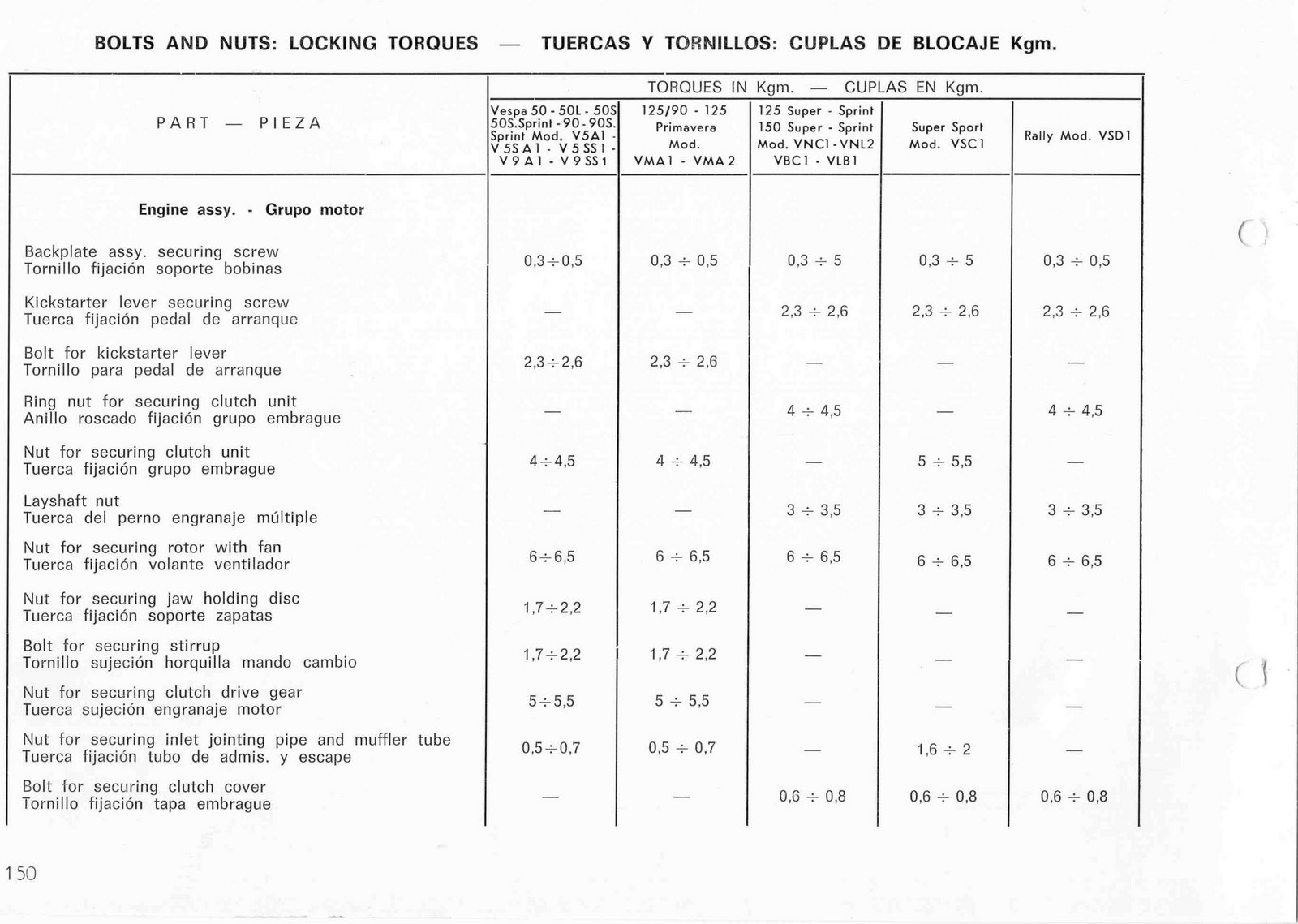
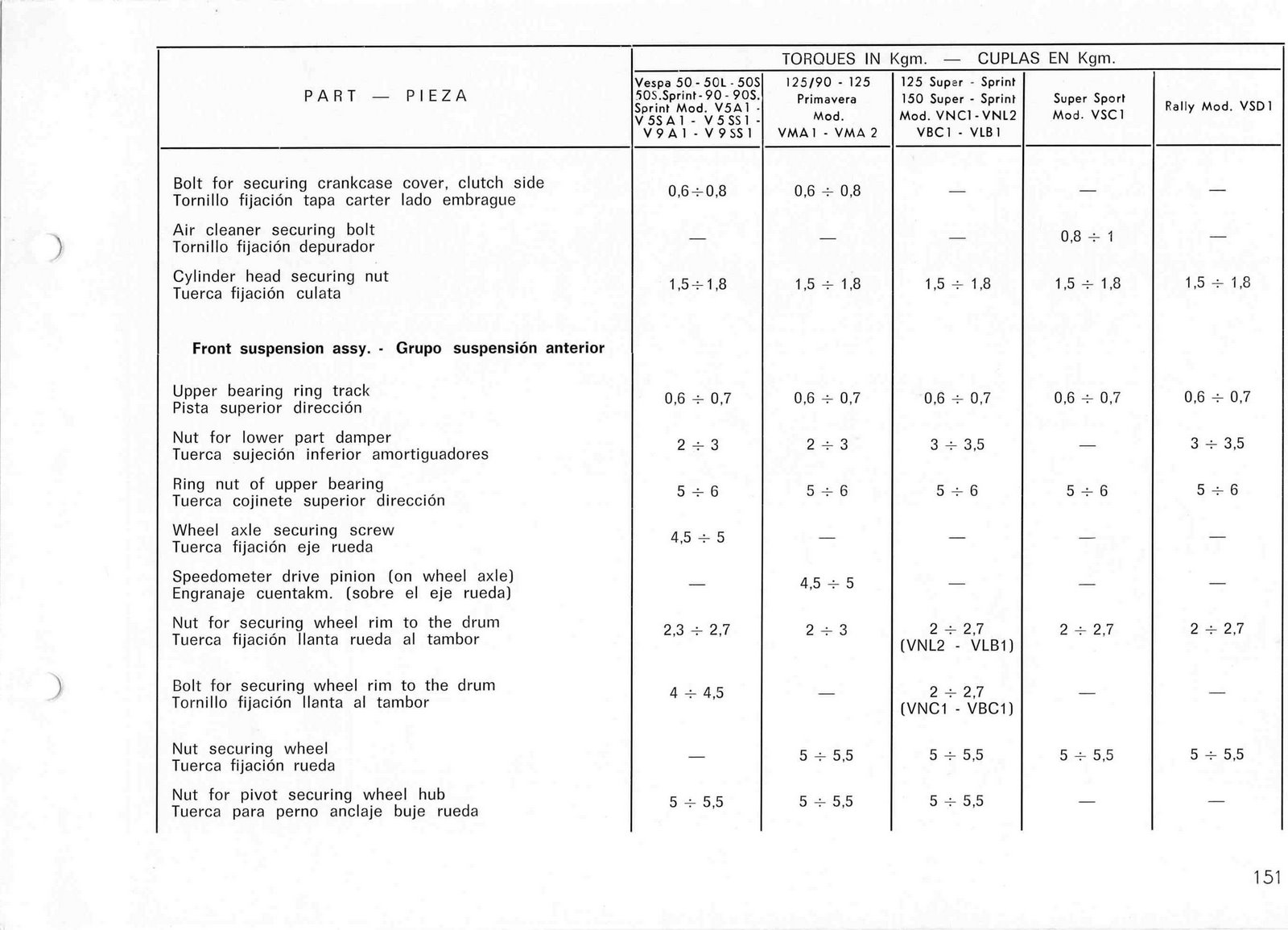
Check out our Scooterhelp.com
Calendar
|
|
|







